
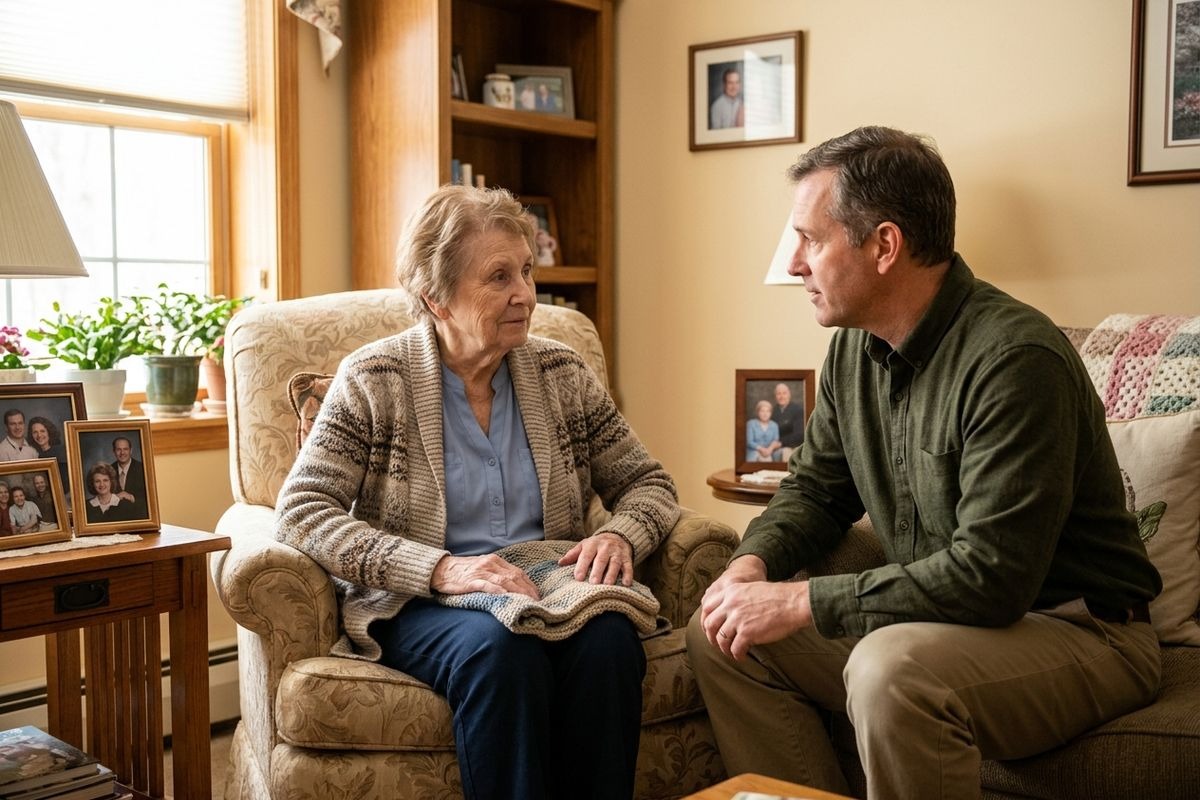
A senior and their adult child sit together in a quiet spot to discuss memory care.
Key Takeaways
- Frequent confusion, wandering, and safety risks are signs your loved one may need more support
- Personality shifts and forgetfulness that affect safety are worth taking seriously
- Caregiver burnout is real and can be deeply impactful; respite care can help you recharge
- Memory care can offer meaningful support while prioritizing dignity and comfort
- Touring a senior living community and staying involved after a move can ease the transition for everyone
Recognizing When Love Alone Isn’t Enough
Caring for someone you love is one of the most meaningful things you can do. But there comes a point when the needs grow beyond what one person can manage alone, and that’s not a failure.
It’s simply a sign that your loved one deserves more than you can provide on your own. You also deserve support that enables you to care for your own needs and the needs of others in your life.
Understanding what memory care offers can help you make a thoughtful decision for your family before a crisis forces the choice for you.
The earlier you recognize what’s happening, the more time you have to find the right path forward, together. Learning when the right time to make a move is can give your family the clarity and peace of mind you need right now.
How to Recognize When Your Loved One Needs More Support
Some changes are easy to dismiss at first: A forgotten name here, a missed meal there. But over time, a pattern can emerge that’s harder to overlook.
There are a few key signs that suggest your loved one may need more attentive care.
- Frequent confusion, disorientation, or getting lost in familiar places
- A noticeable decline in personal hygiene, nutrition, or daily self-care
- Wandering, repeated accidents at home, or growing safety risks
These aren’t just inconveniences. These are signals that daily life has become harder to navigate safely.
When these situations happen more and more often, it’s worth exploring what additional support might look like for your family.
Behavior and Mood Changes That Signal a Shift
Personality Changes Worth Paying Attention To
Sometimes, the changes you notice aren’t physical at all. Your loved one might seem more withdrawn, more anxious, or more easily upset than they used to be. They may pull away from hobbies or friendships that once brought them real joy.
These shifts can be difficult to watch. But they’re often a sign that your loved one is struggling to feel safe and comfortable in their current environment.
A structured, supportive setting can make a meaningful difference in how they feel each day. Recognizing the early signs of dementia can help you act sooner rather than later.
When Forgetfulness Becomes a Safety Concern
Forgetting where you put your keys is one thing. Leaving the stove on, misusing household items, or forgetting medications regularly are other examples. These moments can quickly turn into serious safety risks at home.
When forgetfulness starts affecting daily safety, it’s no longer something you can manage with reminders alone. Around-the-clock support from trained caregivers can help your loved one stay safe while still living with dignity and purpose.
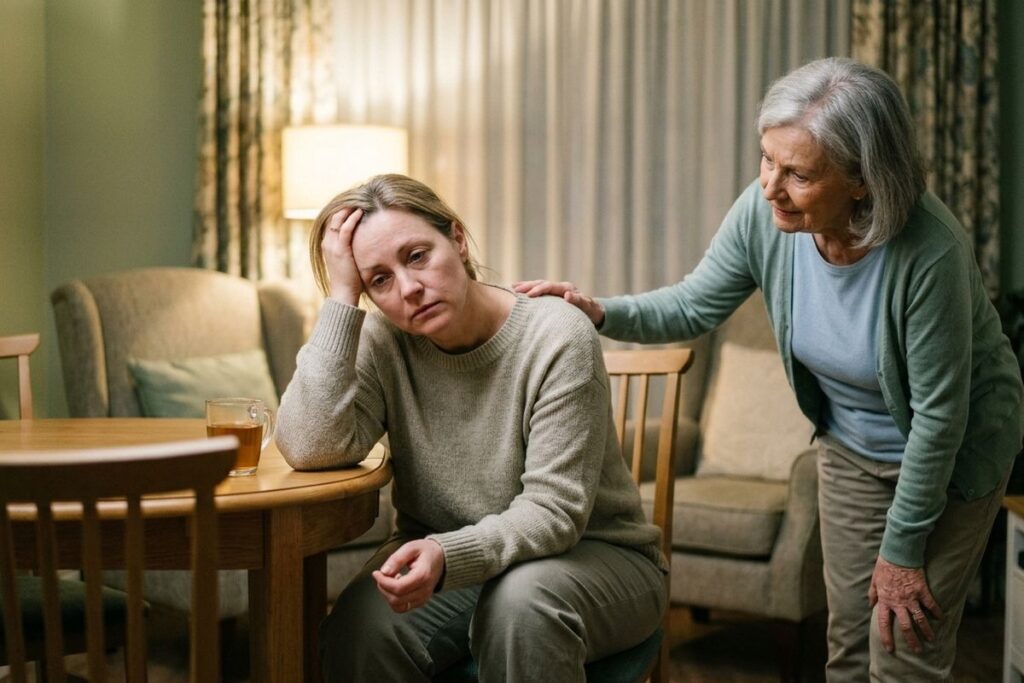
An adult child appears exhausted and overwhelmed, holding their head as their senior loved one touches their shoulder in a comforting gesture.
What Caregiver Burnout Really Looks Like
Signs You May Be Running on Empty
You’ve probably put your loved one’s needs first for a long time. And while that comes from a place of love, caregiving without support takes a real toll.
Poor sleep, constant exhaustion, and a growing sense of anxiety are signs that you may be stretched too thin.
Withdrawing from your own relationships and routines is another signal worth noticing. You matter too, and your well-being directly affects the quality of care you can provide.
Recognizing the symptoms of caregiver stress early helps you take action before it affects both of you.
How Respite Care Can Help You Recharge
Respite care offers short-term, professional support so you can take a breath and rest. It can serve as a helpful bridge before a full transition to memory care, giving your family time to adjust without feeling rushed.
Having trained caregivers step in, even temporarily, can significantly ease the strain. And often, families find that the experience opens the door to a longer-term conversation about what’s truly beneficial for their loved one.
Memory Care vs. Assisted Living: What Is the Difference
These 2 supportive options aren’t interchangeable, and knowing the difference helps you make the right choice.
Memory care offers structured, 24-hour specialized support designed around the unique needs of those living with cognitive changes. Assisted living prioritizes freedom of choice, with support that encourages independence for older adults.
Both prioritize dignity, comfort, and personalized daily care. The right option depends on where your loved one is right now and what kind of support helps them thrive.
Questions to Ask When Touring a Senior Living Community
Touring a community in person can give you a real sense of the environment and the people who work there.
When you visit, ask how care is personalized to each resident’s individual needs. Find out what activities and social programs are part of daily life. Ask how families can participate in fun events and how the community team consistently keeps them updated.
These details matter because they shape your loved one’s everyday experience, not just their medical care. Reviewing what to look for when choosing a memory care community can help you walk in prepared and ask the right questions.
How Your Family Can Stay Involved After the Move
Moving to memory care doesn’t mean stepping back from your role. Visiting regularly keeps your bond strong and meaningful.
Your presence, your stories, and your love are irreplaceable parts of your loved one’s life, no matter where they call home.
All American Assisted Living at Coram is here to walk this journey alongside your family. Reach out today to schedule a tour and see firsthand what compassionate, personalized senior living can look like for your loved one.